November 28, 2016
In his tome – ‘The Social Contract’, Jean-Jacques Rousseau famously said, “Man is born free but, always in chains.” John Locke and other natural law theorists believe man is born with certain inalienable rights. It can further be inferred from Aristotle’s quote: “Man is a social animal” that all his rights are to be restricted to the confines of the society. Moreover, J.S. Mill rightly said that “My rights end where your rights begin”. It can be deduced from this, that the rights man is bestowed upon do have certain restrictions attached to them. These restrictions could be enforced by the State or society through the medium of family, kinship, caste, community and religion and could control his ‘freedoms’ which affect him both positively and negatively. In this essay, I seek to examine the control exercised over by the society in the event of a social boycott and further digress its implications on the Social Boycott Act. The essay will also attempt to bring out the inter-relationship between law and emotions.
Society has always served as the nucleus of humankind’s way of life. It however, can prove to be restrictive to man’s ‘free thought’ and ‘creativity’- both of which Marx passionately stresses upon. Society has been curbing the ‘freedom of man’ since the ancient civilisations. In societies, where the notions of family, caste, class and community are strong and rigid, the social control is equally dominant. In India, for instance, the caste system has held a negative social control in predominantly rural as well as some urban settlements. The ‘Caste Panchayat’ is one such institution that is infamous for their violent acts against members belonging to the disadvantaged sections of society – predominantly, the women and members of the lower castes – at the slightest infractions or acts of resistance against “the traditional and customary norms of society”. Those who dare question the norms are humiliated, beaten up and are socially excluded or banished.
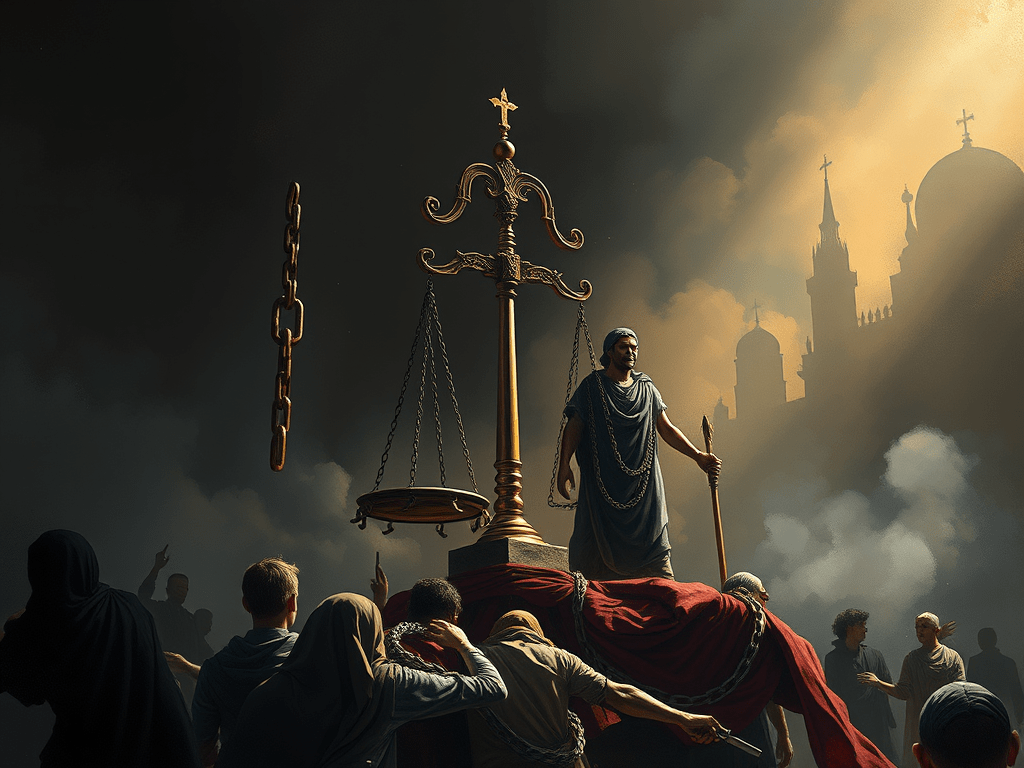
However, it has been seen from time to time that whenever societal influence becomes overbearing, the State, attempts to aid the oppressed by cutting-open the shackles imposed by society on the freedom of individuals through interventions. When “We the People” abolished untouchability under Article 17 of the Indian Constitution it was a case of constitutional intervention. Judicial interventions such as the Supreme Court’s decision to declare Khap Panchayats illegal have also been undertaken. The State intervened legislatively through Acts such as The Maharashtra Protection of People from Social Boycott (Prevention, Prohibition and Redressal) Act, 2016 or simply, the Social Boycott Act which criminalises the practice of social boycott.
Social Boycott has for aeons been used by the dominant sections of society to remain in power and oppress those below them in socio-economic hierarchy. Its purpose being: to cripple those who question their authority or challenge the social norms with their actions, by seizing their resources, depriving them of all facilities, cutting-off their access to public places and prohibiting social interaction.
The Act however, is not the first attempt by the government to prevent social boycott. In 1949, the State Government of Bombay introduced the Bombay Prevention of Excommunication Act., which was later struck down after it was declared Ultra Vires as it was in violation of Article 26 of the Constitution of India in the case of Syedna Taher Saifuddin v Tyebbhai Moosaji Koicha and Another, popularly known as the Dawoodi Bohra case. Alok Prasanna Kumar, in his article on Social Boycott, differentiates between excommunication and social boycott. In his article, he explains that when a person is excommunicated, he or she is not allowed to visit or take part in any religious activity. The fundamental difference between them, however, is in the nature of authority being claimed; excommunication is carried out by someone who has religious authority to do so; social boycotts on the other hand do not necessarily involve anyone with “religious authority”
The Social Boycott Act, 2016 defines social boycott as “a gesture or an act, whether oral or written, of any social discrimination between the members of the community”. In simpler terms, it is the will of the communities being imposed on the individual’s freedom against his will. Though, the Act qualifies as affirmative action and on paper seems very promising, there is a certain air of scepticism around its enforcement.
The Act originally meant to foster a feeling of ‘fraternity’ or ‘camaraderie’ among the citizens, could end up working counter-productively. Sections 7 and 8 of the Act mention a punishment extending up to seven years for those indulging in the act of social boycott. However, it wouldn’t help the victim’s reputation if his or her “oppressors” are imprisoned as it would end up creating an added sense of animosity towards him or her. There are certain parts of the Act which are left ambiguous, for instance, the Act defines a “victim” as any individual who suffers or experiences physical, mental, psychological, emotional or monetary harm as a result of the boycott. However, in many cases, it would be difficult to prove actual “physical” or “monetary” harm in the courts of law.
The intentions behind Act in my opinion were noble, however, the authorities must tread carefully as the matter dealt with is of high sensitivity and if a slightest abrasion is caused, might end up doing more harm than good. The Law can order one to not ostracise or boycott a person however, it can’t enforce in them positive feelings of fraternity, cooperation and a sense of community. The Act might thus end up generating feelings of fear, animosity and might further the gap between the groups.
Law and emotion theorists have, for a while now, suggested the that the role of law has increasingly become associated with rationality and how it has been given more importance over the course of time. They argue that emotions influence law as well, and further their case by elucidating examples of judicial rulings wherein the judge or jury is swayed by emotions as seen in the famous case of the People of the State of California v. Orenthal James Simpson and K.M. Nanavati v. State of Maharashta. However, distinguished scholar Robin West in her article ‘Law’s Emotions’, explores the correlation between the law and emotions and asserts it also produces four different types of emotions, them being: American Constitutional Law, Consensual Dysphoria, Equal Opportunity Society and Individualism, Fear & Failures to Thrive of which I will be focusing on the first three emotions.
West asserts that we neither love, revere or swear allegiance to a monarch. However, she remarks that the “very citizenry that takes pride in its anti-authoritarian rambunctiousness”, finds itself guilty of a deep sense of submission, reverence, respect, and obedience towards the constitution whose ‘moral virtue’ is brought out here. It is interesting to see how the very scholars who possess a critical stance toward legal authority, go out of their way to deflect any form of criticism directed towards the constitution to either judicial rulings (as evident in the aftermath of cases such as Plessy v. Ferguson, Brown v. Board of Education or Roe v. Wade). Freud’s comment that “we slayed a monarchic authority and replaced it with a totemic constitution” seems very appropriate. The crux of this argument being that if unjust, the law tends to threaten the unlawful prosecution of generally those at a socio-economic disadvantage (of “lower castes”), more often than not, when seen in the purview of our Indian legal system.
West labels the second emotion as “Consensual Dysphoria” through which she elucidates the importance of ‘consent’ in the modern-day legal system. According to her, ‘consent’ is the ‘thin line’ of difference between what is legal or ‘culturally good’ and what is illegal or ‘culturally bad’. This has led to the creation of an illusion that wherever consent is available, the ‘benevolent notions’ of freedom and liberty go hand in hand, making such a society ripe for wealth generation. She, however, poses the conundrum of whether these “acts of consent” produce anything else and puts forth the concept of ‘consensual dysphoria’ which claims to produce an “emotionally toxic undercurrent” as they potentially reduce the ability to imagine more meaningful forms of intimacy and blind us to the cruelties within the spheres of the liberty that were upheld with pride. An apt example would be the one taken up by West in her write-up, where she depicts how an employer-employee relation is no less than ‘enslavement’ without the consent of the concerned parties. It is only when consent is given that the relationship, otherwise very superficial, becomes legal. West then brings in Marx’s theory of how the bourgeois assert control over the proletariats in a capitalist society: the ones with power can and do exploit the socio-economically disadvantaged.
The third emotion the West talks about is ‘Equal Opportunity Society’. She goes on to describe a State where equal chances exist for all to achieve success based on their ability, irrespective of their race, gender, religion, ethnicity, religion, race or socio-economic factors, as a good one. In such a State, citizens are judged by their actions and not their inbred fates. It is important to note that in such a society, the idea of equal opportunity extends further than equal employment laws or antidiscrimination norms. The idea is, however, far too utopian. West believes that centuries of marginalization and subordination has left scars which demand compensation. Moreover, many believe that the greatest impediment to such a world is inherited wealth and inherited poverty. Even if all start on an equal footing, enterprising and hardworking individuals become successful and amass resources whereas, others fail to do so. Inequality, thus begins to creep into this “utopian dream” right after the first-generations, with them passing on their resources and knowledge to their offspring. Ergo, the model fails in concept right after its inception. West, then goes on to tackle the issue of emotions emanating as a consequence of the colossal cut-throat competition yielding in a society beset with adults in a state of profound anxiety. The problem with such a society that lacks in fraternity and cooperation would be that some members would fail to succeed and would be considered as ‘less desirable’ by society. What makes it worse is that unlike other models, this one bequeathing equal opportunity to all would mean that the person who failed would have no excuse for his shortcomings and just like that, he or she would begin to be socially excluded for the sole reason of “being unsuccessful”. In this “fair” society, the only people that benefit are those who succeed initially and their subsequent generations.
In conclusion, it would be a fair statement to make that all three of West’s emotions generate manifold emotions. A perfect society would be one where a conglomeration of these ideas are exhibited: where the people aren’t threatened by the ruling authority, the citizens are bestowed upon actual “free consent” and each of them is given an equal chance at succeeding and equals are treated equally. Quoting the Batman franchise: “This is not the society we want but, the society we deserve”. Even in this society, there is a need for acts such as the Social Boycott Act as it keeps a fair check on the society’s functioning and could prove detrimental in preventing anything unlawful from transpiring by taking pre-emptive steps. Social boycott continues to remain one of the most powerful weapons of social control in the arsenal of the dominant members to get their own way without using force to achieve whatever their understanding of “societal harmony” is.
REFERENCES
- Kumar, Alok Prasanna ‘Social Boycott Act: Constitutional Validity and Article 26’, Economic and Political Weekly, 25 May 2016. Web. 12 April 2017, L1 21 10
- West, Robin, ‘Law ‘s Emotions’, Georgetown University Law Center, 2016. Web. 12 April 2017, 19 340
- The New Maharashtra Social Boycott Law: Key Constitutional Issues. APRIL 21, 2016 11:07 AM. < https://indconlawphil.wordpress.com/2016/04/21/the-new-maharashtra-social-boycott-law-key-constitutional-issues/>. Web. 12 April 2017
- The Maharashtra Protection of People from Social Boycott (Prevention, Prohibition and Redressal) Act, 2016 <https://www.maharashtra.gov.in/site/upload/WhatsNew/SuggestionObjection_MaharashtraProhibitionOfSocialBoycottAct_2015.pdfWeb. 12 April 2017
 Bhrigu A. Pamidighantam
Leave a comment